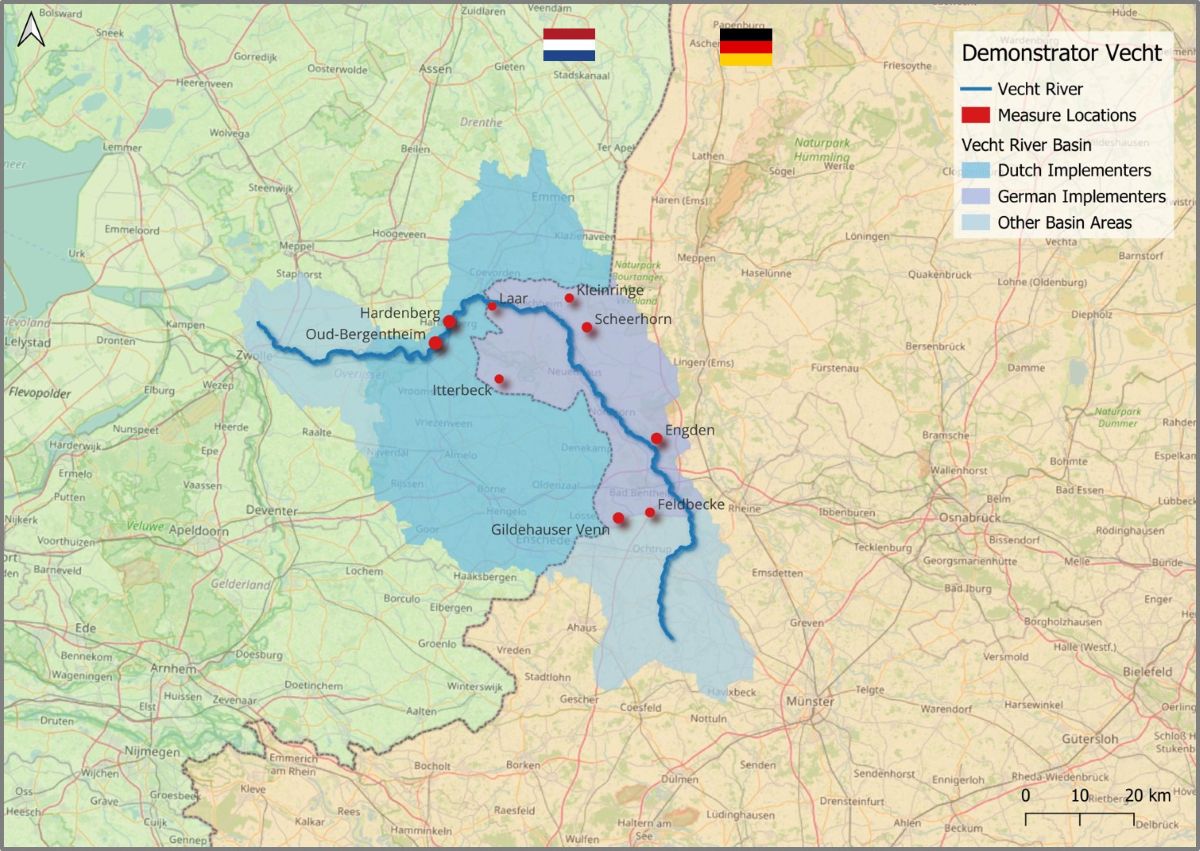
The Vecht River Basin is a transboundary lowland river system shared between the Netherlands and Germany, home to more than two million people. The basin is characterised by rural landscapes interspersed with medium-sized cities and is highly valued for recreation, tourism, agriculture and nature.
Historically, the river and its valley were heavily modified, aiming to ‘get rid of water quickly’. Extensive drainage of peatlands, canalisation and straightening of the river, and reduction of floodplains significantly reduced the basin’s natural water retention capacity. With climate change, flood risk has intensified: water from rainfall travels very fast through the basin. While droughts present a new challenge for the area, with base flows being very low during dry summers.
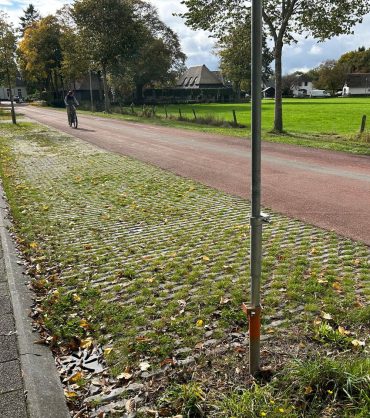
Τhe Vecht demonstrator aims to support a transition towards a more sponge-like river basin, where water is retained in soils, groundwater, rivers and landscapes for longer, helping to buffer both floods and droughts.
This includes:
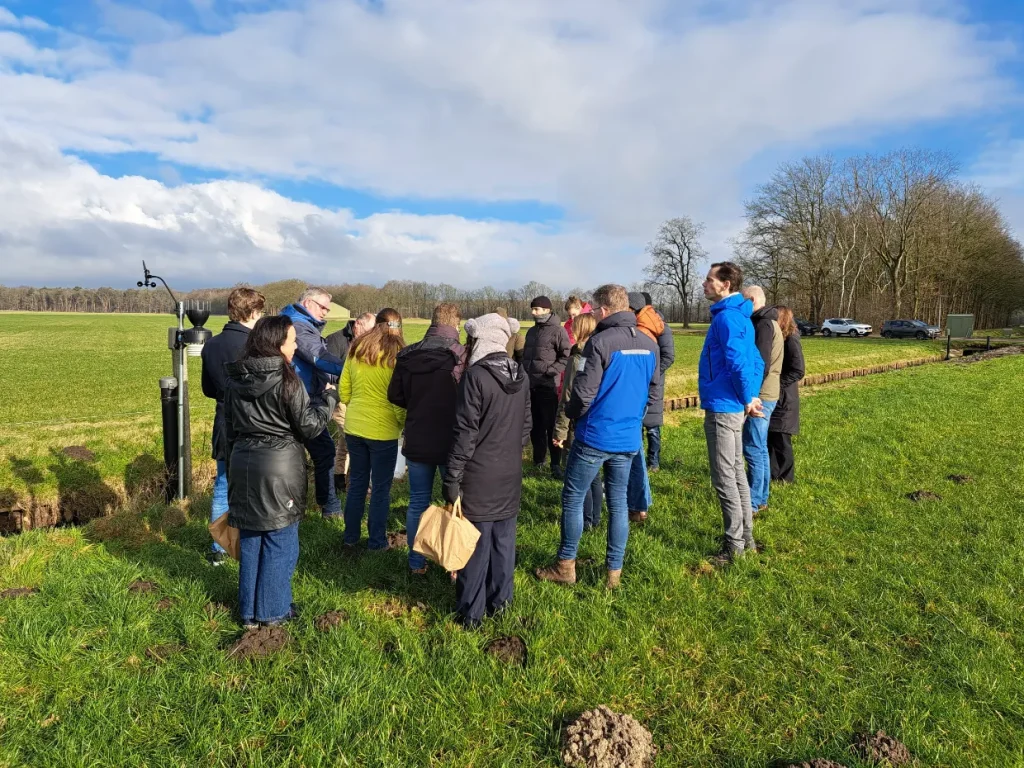
Stakeholders and the process:
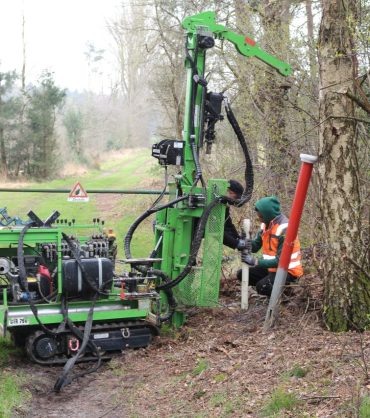
Physical sponge measures:
The work builds on long-standing initiatives such as ‘Room for the Vecht’ and contributes to the development of an updated, climate-resilient sponge strategy for the entire basin.
Videos: