On 2 October, a masterclass brought together experts from across Europe to exchange practical experience on climate-resilient landscapes. As part of the annual Vechtdaldag, more than 250 members of the public also joined afternoon excursions to explore water management, biodiversity and the landscape first-hand.
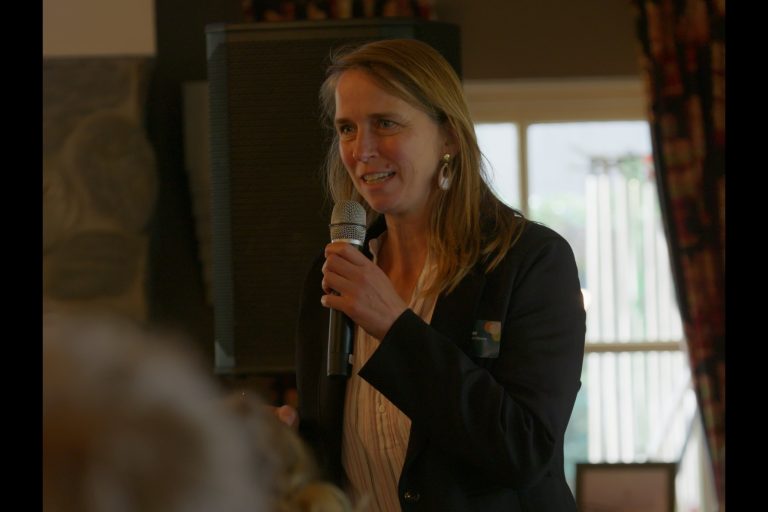
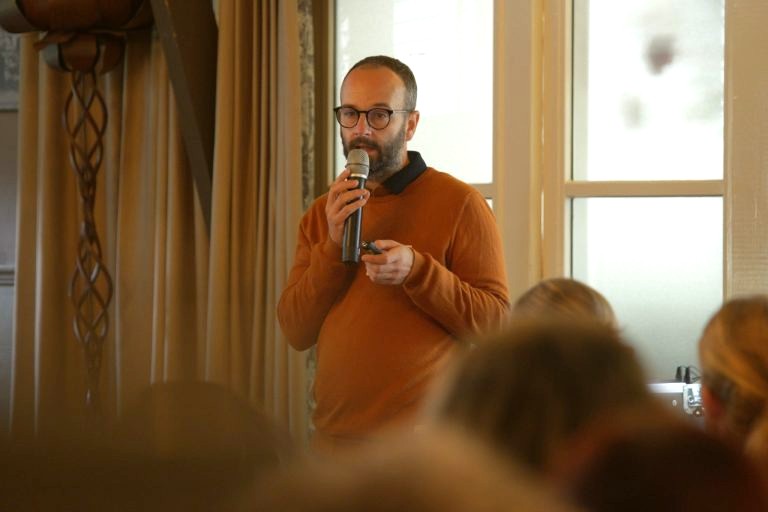
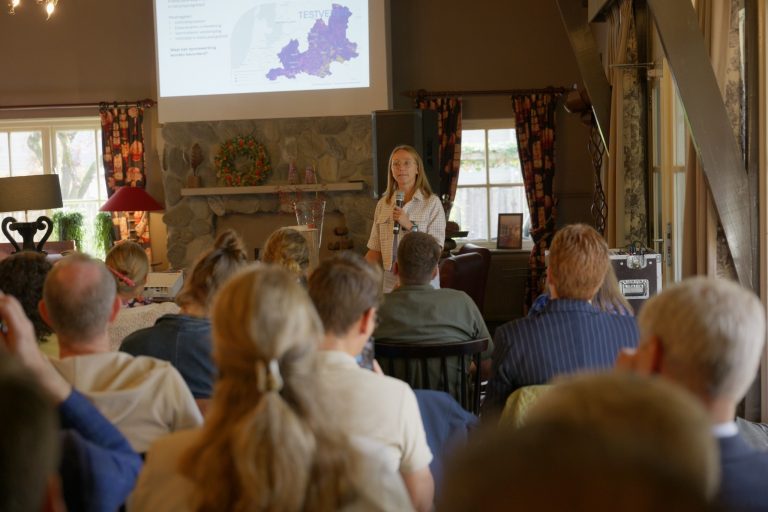
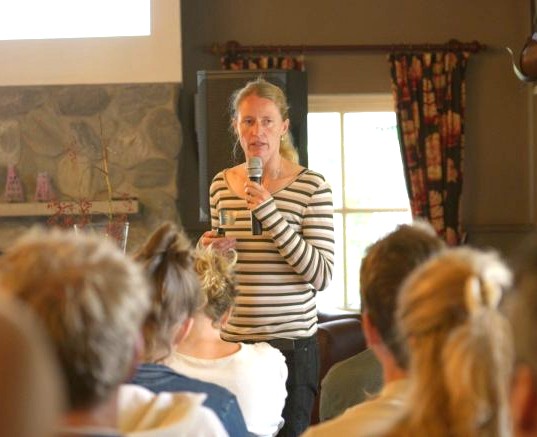
On Friday 2 October 2026, the annual Vechtdaldag (Vecht Valley Day), organised by the Ruimte voor de Vecht partnership, took place at Beerze Bulten in the Netherlands. As part of the day’s programme, Ruimte voor de Vecht and SpongeWorks jointly organised the morning masterclass, The Vecht Valley as a Sponge: From Strategy to Practice (Vechtdal als spons: van strategie naar praktijk).
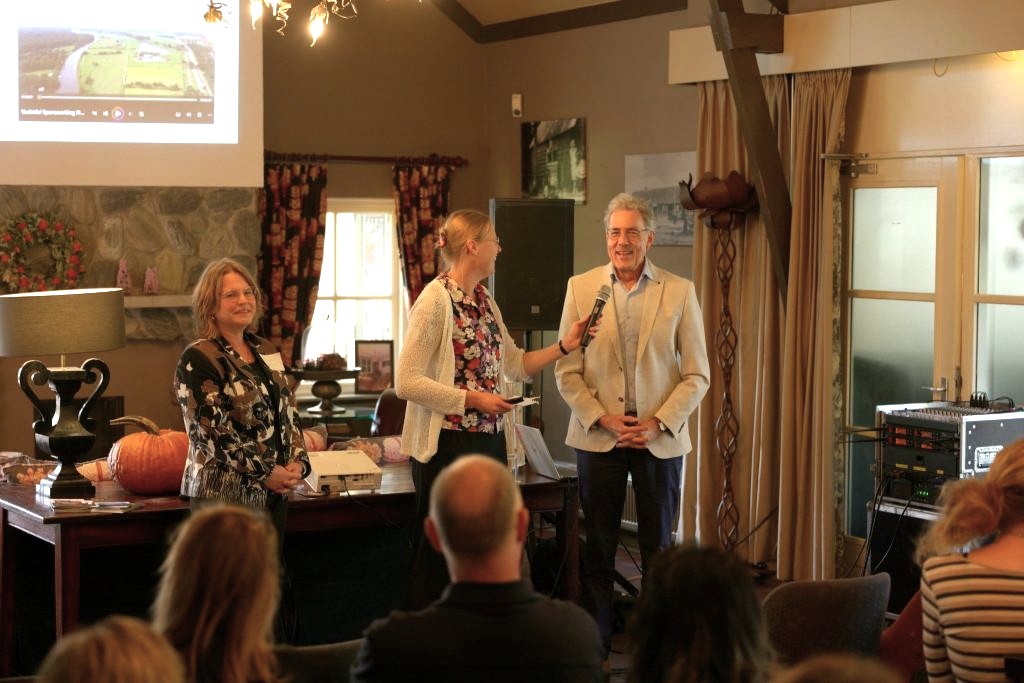
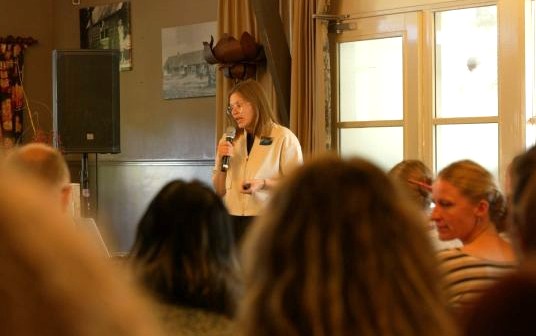
The masterclass brought together researchers, public authorities, land managers and policymakers from the Netherlands, Germany, France and Greece. Ellis Penning (Deltares / SpongeWorks) moderated the session, which opened with contributions from Stefan Kuks, Watergraaf of Waterschap Vechtstromen, and Sandra Chichon, First Deputy District Administrator of Landkreis Grafschaft Bentheim.
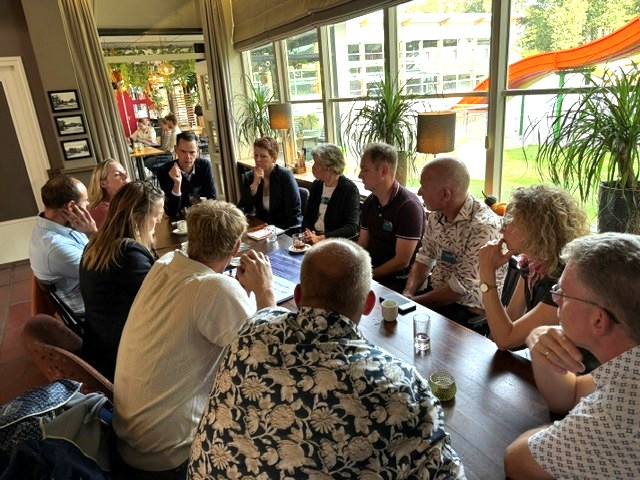
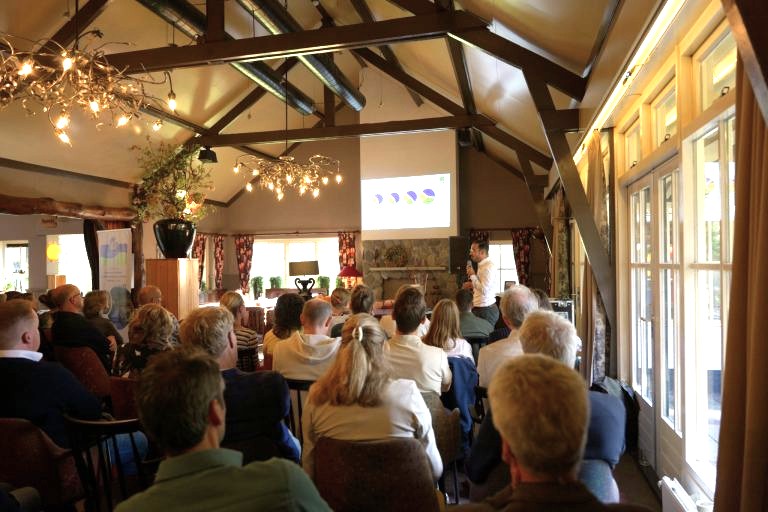
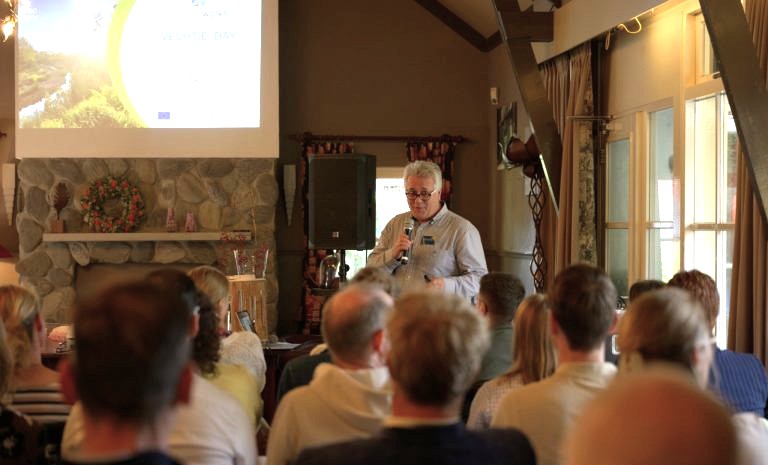
Presentations and interactive discussions explored how to make the Vecht region more resilient to both drought and flooding, and how to translate the ambition of a sponge landscape into practical measures.
Key insights from SpongeWorks presenters:
Roberto da Costa Gonçalves (Grafschaft Bentheim / SpongeWorks): The aim is to shift from a drainage-focused approach to a ‘sponge landscape’. Climate change is bringing more extreme conditions, from water scarcity to excess water, while historical drainage has reduced natural water buffers. The response needs to be integrated across soils, streams, groundwater and floodplains, with evidence showing how much water measures retain and what benefits they bring to farmers and landowners.
Andreas Panagopoulos (Pinios basin SpongeWorks Demonstrator, Greece): Technical measures are only part of the solution. Successful implementation depends on four elements: context, people, incentives and evidence. Users need to be involved from the outset, and measures adapted to local needs. Replication is not about copying interventions, but understanding and reproducing the conditions that make them work.
Anne-Marie Hitipeuw (Ministry of Infrastructure and Water Management, Netherlands): Increasing the sponge capacity of the landscape as a national climate adaptation instrument. Sponge function can help address drought and flooding while supporting biodiversity, CO₂ reduction and economic benefits. There is a need to embed it in national policy and spatial planning, supported by guidelines, maps and cooperation between public authorities and water managers.
Simon Barreau (Lèze basin SpongeWorks Demonstrator, France): Sponge measures are also a matter of cooperation. Water managers and farmers may have different priorities, from reducing flood risks to protecting soil fertility and agricultural yields. Connecting these interests, tailoring measures to individual fields and maintaining dialogue are essential to successful catchment management.
Amy ten Berge (University of Twente / DIWA): From analysis to implementation. Maps and models can identify where sponge measures could have the greatest effect. Combining scientific analysis with practical pilots is essential, as is translating successful local interventions into strategies at regional scale.
Angela Klein (JCAR-ATRACE / SpongeWorks): Knowledge and cross-border cooperation for climate adaptation. Nature-based solutions can help reduce peak flows, but their effects depend on the scale of implementation and the climate scenario. Better data, modelling and a shared knowledge base are important for informing decisions.
Maike Gebker (Leibniz University Hannover / SpongeWorks): Building a long-term sponge strategy, step by step. Monitoring, learning and adapting do not have to be complicated or expensive. Lasting progress also requires connections between governance levels and sectors, supported by a shared vision across national borders.
The discussions highlighted the importance of seeing the Vecht as one connected water system. Although many measures are already being implemented, a clearer overview and stronger coordination are needed. Monitoring provides evidence that sponge measures influence groundwater levels, while cross-border cooperation is essential because water does not stop at national boundaries.
Taking sponge landscapes to the wider public
The afternoon excursions were part of the wider Vechtdaldag programme, which attracted more than 250 participants to activities across the Vecht region. SpongeWorks contributed two excursions that brought the connections between water, nature and the landscape closer to the public.
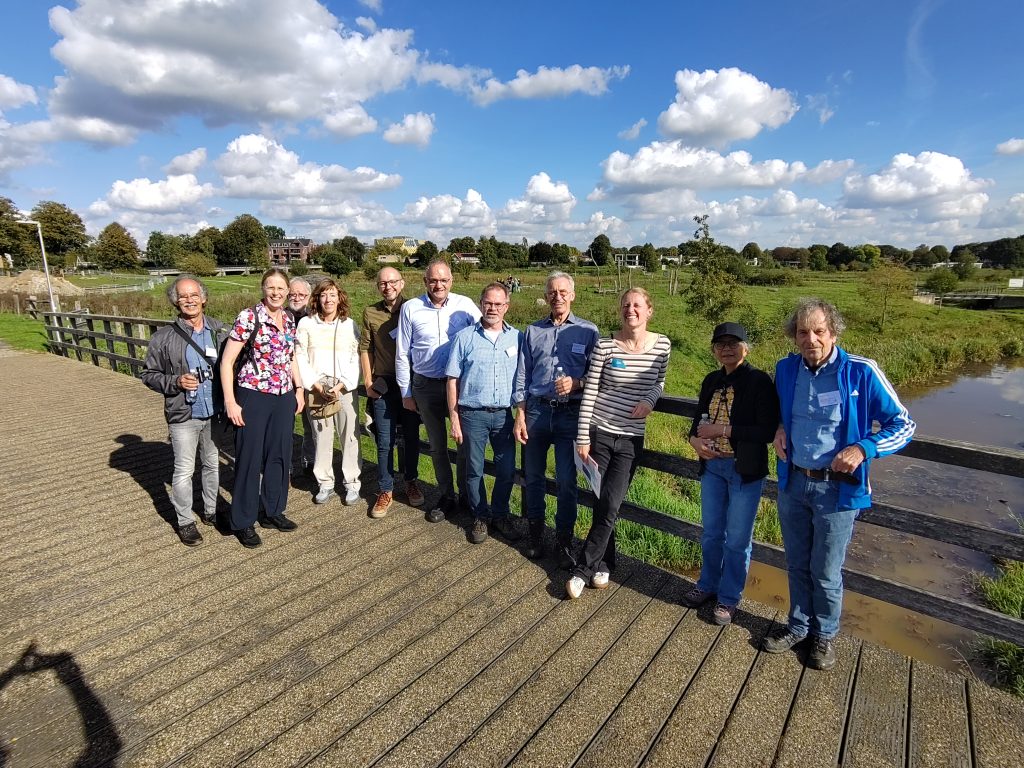
Ellis Penning led a group to the floodplain in Hardenberg for a practical introduction to biodiversity and how to observe it using simple tools. Participants tried ObsIdentify, a free photo-recognition app that helps identify wild plants, animals and mushrooms. By recording and sharing their observations, users can also contribute to biodiversity research. The group discussed how water management and biodiversity are connected, and how the municipality of Hardenberg is working to improve biodiversity across its area.
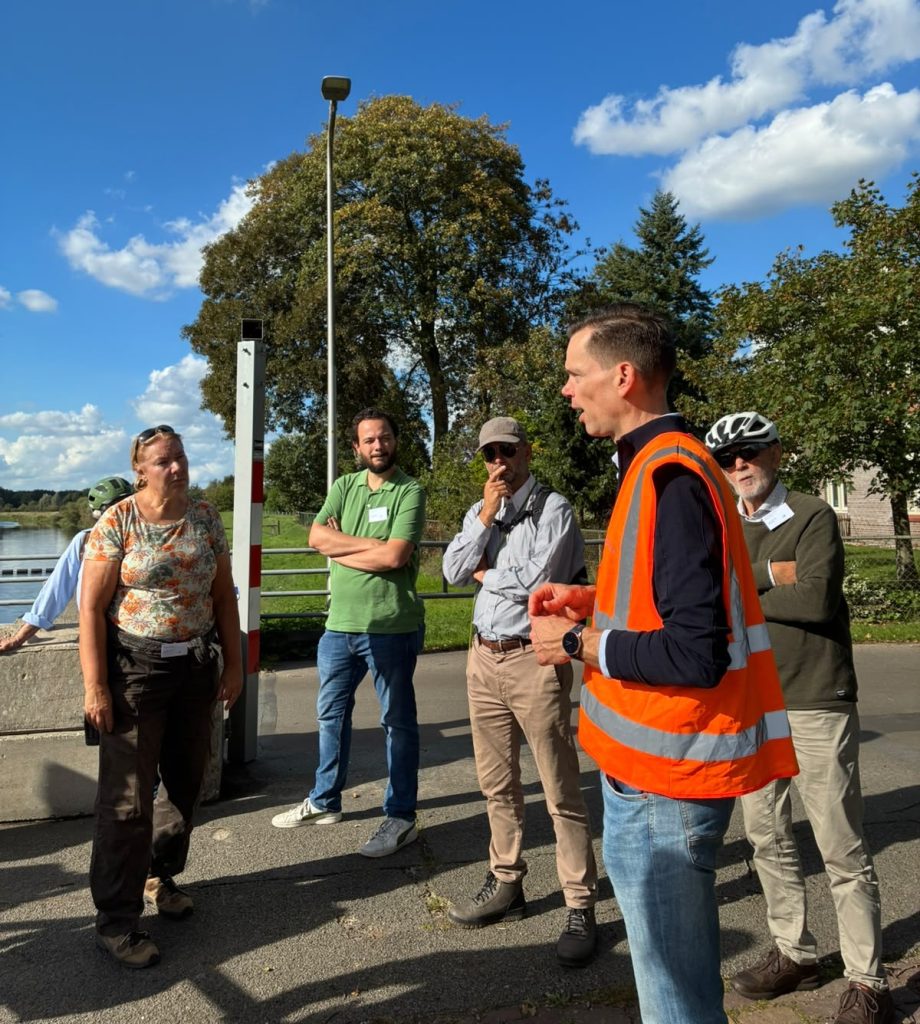
Another group explored the landscape around Junne by bicycle with Stef Fortkamp from Waterschap Vechtstromen. Following the Vecht, the weir at Junne and former river channels, participants discovered the landscape from the perspective of water. Stef explained how water has shaped the area over time, what a changing climate means for this landscape, and the choices water managers face for the future.
These excursions offered different ways to understand the landscape: identifying wildlife in a floodplain, seeing how water infrastructure works, and exploring the connections between rivers, nature and land use.
From strategy to practice, together
The Vechtdaldag brought together different projects, organisations and communities around a shared landscape. Through its contribution to the masterclass and public excursions, SpongeWorks connected international experience with practical activities in the Vecht region.
Creating more resilient, sponge-like landscapes involves farmers, land managers, municipalities, water authorities and local communities. It requires an understanding of how water, nature and everyday land use are connected.