In Hungary, the DONG-SPONGE pilot, one of SpongeWorks Associated Regions, is taking an important step towards improving local water retention by monitoring water quality, measuring water flows and collecting detailed topographic data across the Dong-ér canal catchment.
The pilot, aims to increase water retention by reviewing water management practices on the canal network and identifying opportunities to retain water locally instead of draining it away.
To support this work, experts from ATIVIZIG, the Lower Tisza District Water Directorate, installed 23 water quality monitoring points along the more than 77-kilometre-long Dong-ér canal. Water samples will be collected three times a year, in late spring to early summer, late summer to early autumn and winter, to monitor key water quality parameters and better understand seasonal changes.
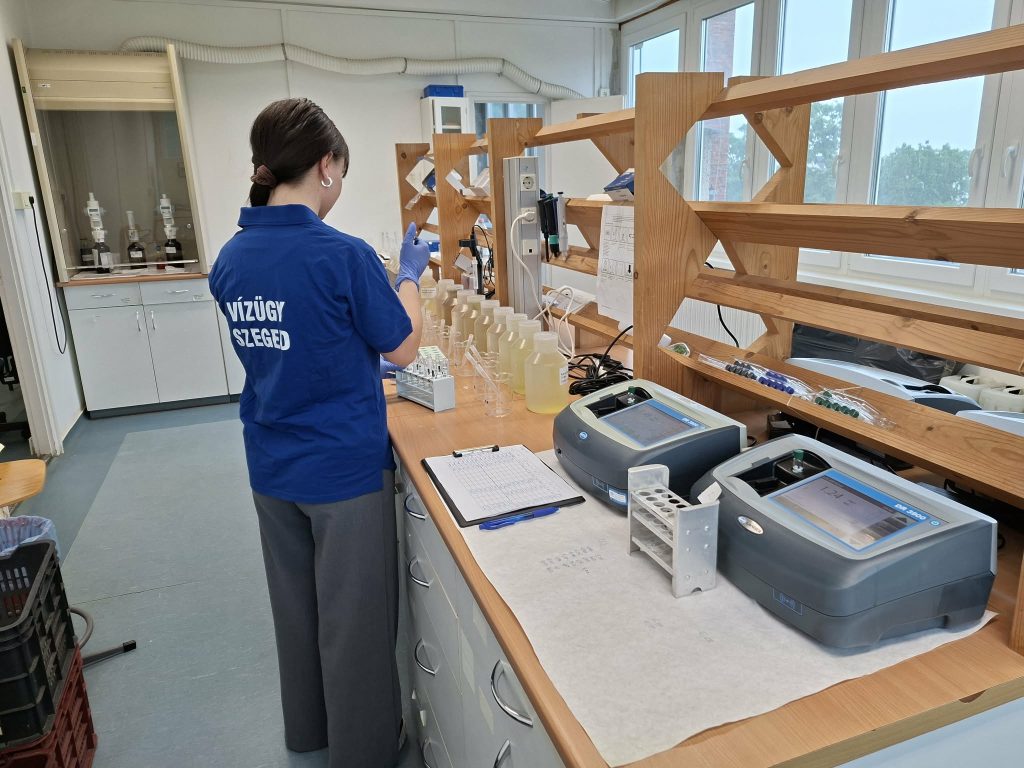
The first sampling took place on 6 May 2026, when specialists collected water quality samples samples that were subsequently analysed in the lab for key water quality parameters such as Na+, K+, Ca2+, Mg2+, NH4+, ammonium-N, NO3-, nitrate-N, Cl-, SO42-, PO43-, HCO3-, pH, total hardness, air temperature, water temperature, specific conductivity, Dissolved oxygen (field), Oxygen saturation (laboratory) values.
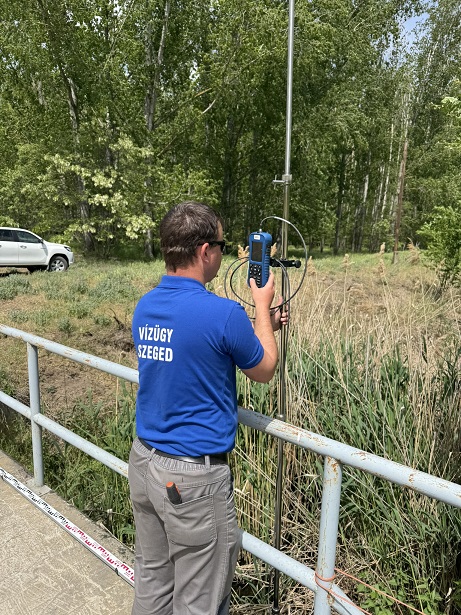
Flow measurements were also carried out in 4 locations. Due to limited rainfall in 2026, water levels in the Dong-ér canal were exceptionally low, with some sections of the riverbed completely dry.
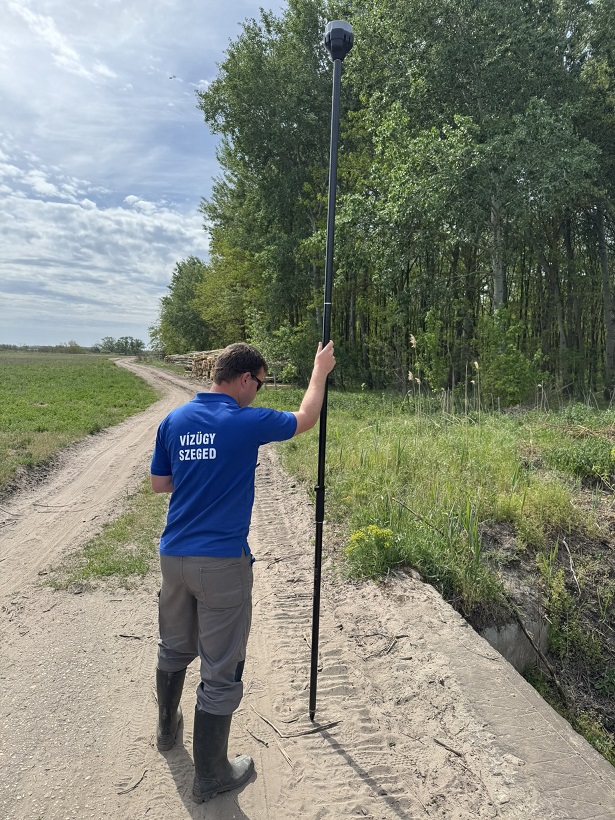
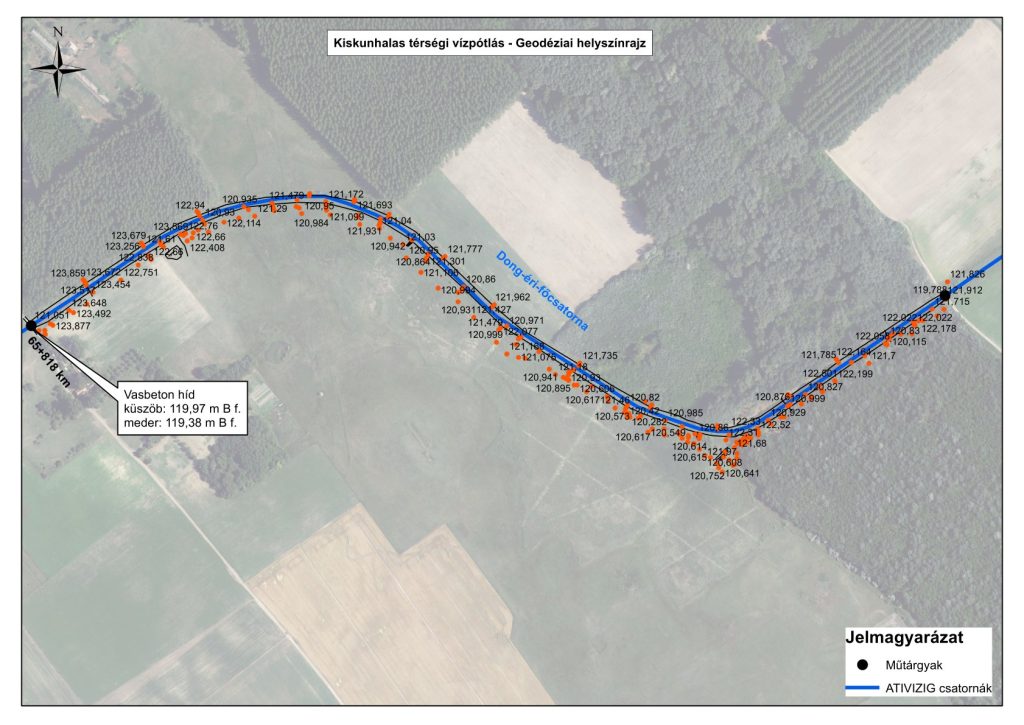
To identify suitable locations for future water retention measures, the project team also carried out detailed topographic surveys. Geodetic measurements are helping determine safe water levels for future retention structures while ensuring neighbouring areas are protected from flooding.
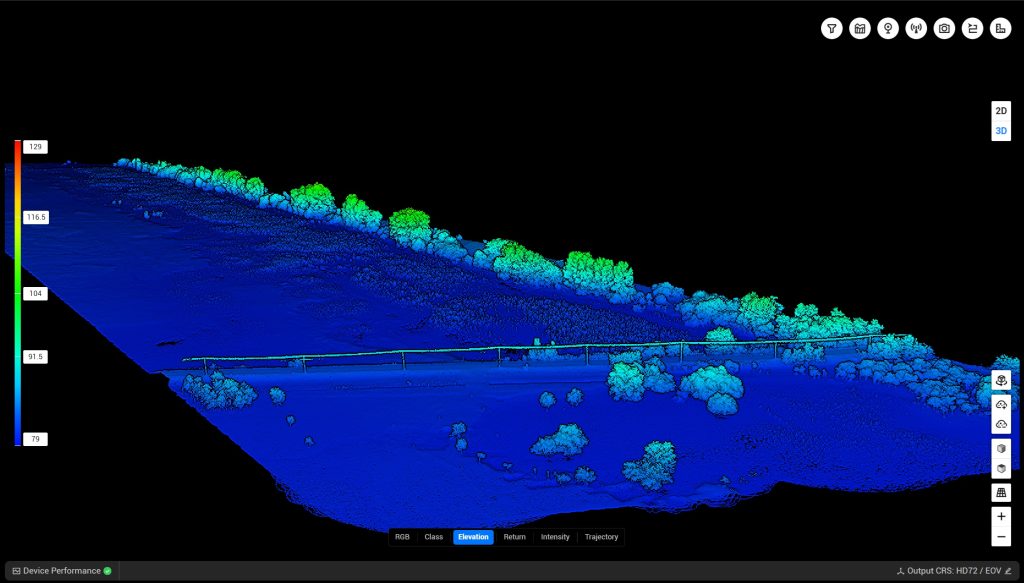
In the Ős-Dong-ér pilot area, the team combined field surveys with high-resolution drone-based LiDAR mapping to create an exceptionally detailed model of the landscape. These data will support the design of water replenishment measures and form the basis for the permits required to restore water to sections of the riverbed.
Together, these monitoring activities provide the scientific evidence needed to design effective sponge measures that can help retain water in the landscape, strengthen resilience to drought and support more sustainable water management in the Dong-ér catchment.
The SpongeWorks project has received funding from the European Union’s Horizon Europe research and innovation programme under grant agreement No 101156116 and from the UK Research and Innovation/HM Government. The project runs from 1 September 2024 to 31 August 2028.
Views and opinions expressed are those of the author(s) only and do not necessarily reflect those of the European Union or the granting authority, the European Climate, Infrastructure and Environment Executive Agency (CINEA). Neither the European Union nor the granting authority can be held responsible for them.