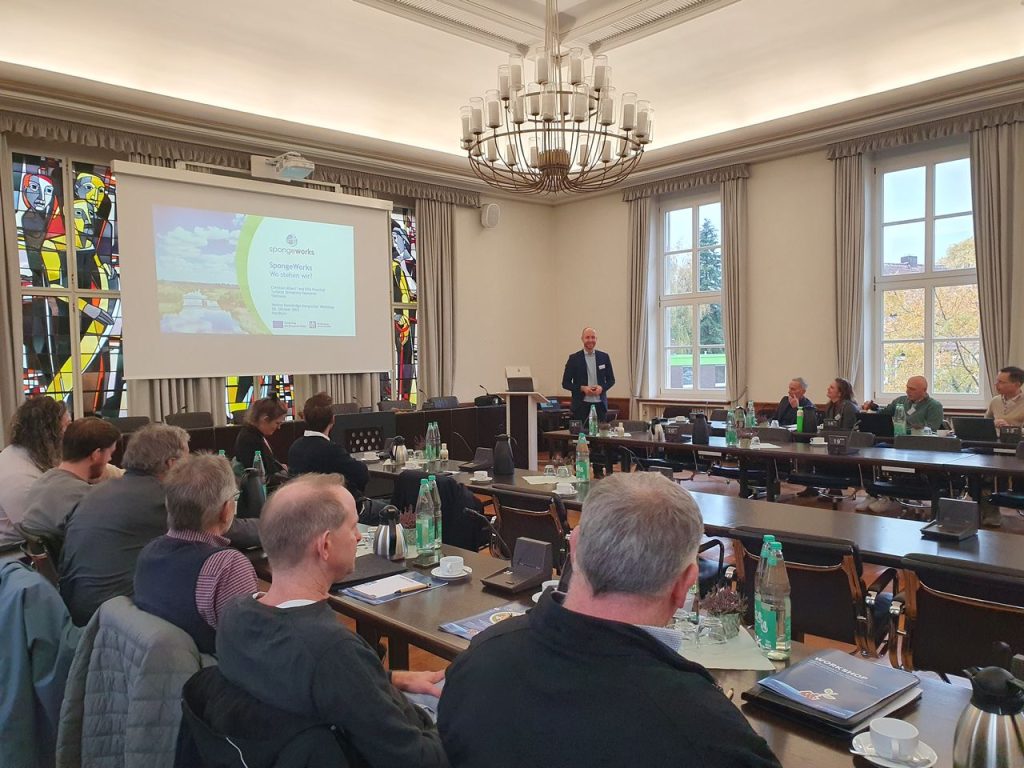
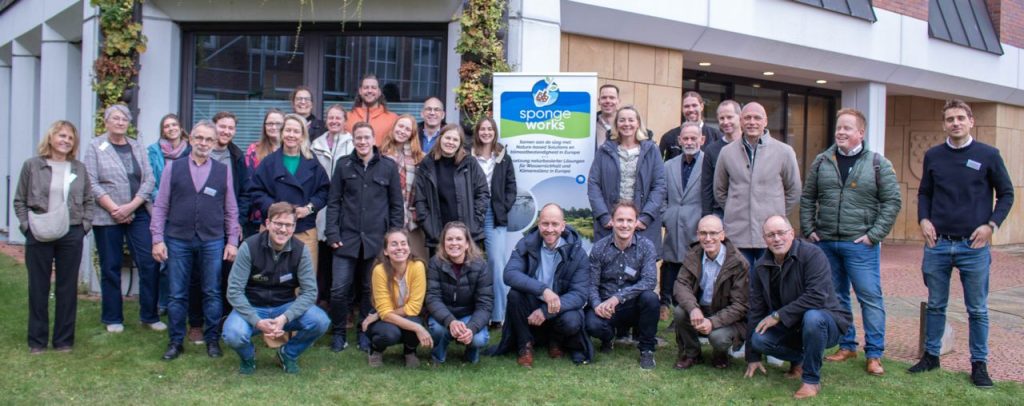
On 29 October 2025, stakeholders from across the German–Dutch Vecht/e basin came together to explore what a climate-resilient future for their region could look like – and how today’s actions can help shape it.
The workshop brought together participants from water management, business, environmental organisations and regional authorities, creating a shared space to reflect on challenges, opportunities and future pathways for the basin.
Mapping today’s water challenges
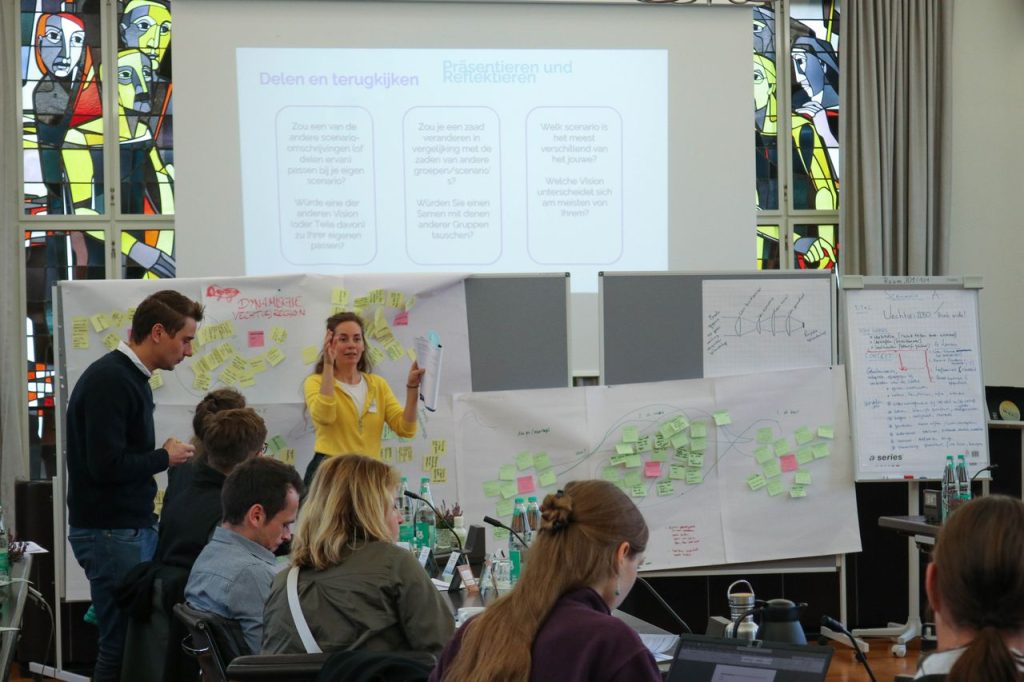
Using interactive mapping tools, participants identified 31 local water challenges affecting the basin today — from flood risks and summer droughts to water quality and pollution pressures. The exercise highlighted how closely connected these issues are across the landscape and across the German–Dutch border.
Participants then worked with four future scenarios for the region, including “Dynamic Vecht/e Region” and “The Feasible Utopia”, to explore how different policy choices, land use patterns and management approaches could shape the basin by 2050.
These scenarios provided a structured way to discuss trade-offs, risks and opportunities, and to reflect on what a desirable and realistic future could look like.
Exploring future scenarios for the Vecht/e
Participants then worked with four future scenarios for the region, including “Dynamic Vecht/e Region” and “The Feasible Utopia”, to explore how different policy choices, land use patterns and management approaches could shape the basin by 2050.
These scenarios provided a structured way to discuss trade-offs, risks and opportunities, and to reflect on what a desirable and realistic future could look like.
Planting the seeds of sponge landscapes
A central focus of the workshop was to explore how “sponge” measures — actions that slow down, retain and store water in the landscape — can contribute to long-term resilience. Participants reflected on how small, place-specific interventions today, such as changes in agricultural practices, river and floodplain restoration, wetland rewetting or urban green–blue solutions, can combine over time to strengthen the basin’s overall water retention capacity and climate resilience.
A co-creation process for real-world strategies
This workshop forms part of the SpongeWorks Knowledge Integration process, which supports the co-creation of integrated sponge strategies, action plans and implementation roadmaps in each demonstrator basin.
The approach brings together local knowledge, scientific evidence and stakeholder perspectives to explore future pathways and co-develop practical solutions. Through a series of workshops and wider stakeholder engagement activities, participants jointly assess challenges, explore future scenarios and identify realistic options for implementation that can be integrated into existing planning and governance processes.
By linking participatory dialogue with scientific tools such as participatory mapping, scenario modelling and collaborative planning methods, the process helps create a shared and informed basis for decision-making and long-term action.
Strong engagement across the border
It was inspiring to see such strong engagement from stakeholders across sectors and across the German–Dutch border, reflecting a shared commitment to building a more resilient Vecht/e basin.
A special thank you to the organising team from Leibniz Universität Hannover, University of Twente and to Jakob Trock-Jansen (Industrial Design Engineering, DesignLab, University of Twente) for producing the excellent video documenting the workshop.