

On 22 May 2026, the city of Trikala hosted the 2nd Technical Meeting and Geodesign Workshop, titled “Co-designing Sponge Strategies for the Pinios River Basin: Shaping the Vision.” The event took place at the historic Matsopoulos Mill and marked an important step in the collaborative development of climate resilience solutions for the Greek Demonstrator area.
Organised by e-Trikala S.A. – Municipality of Trikala, the Soil & Water Resources Institute of ELGO-DIMITRA and WWF Greece, in collaboration with Leibniz Universität Hannover and PASECO SP LTD, the workshop built on the outcomes of the 1st Technical Meeting and moved the process from discussion and idea generation to the development of a shared, realistic and actionable vision for the future of the Pinios River Basin.
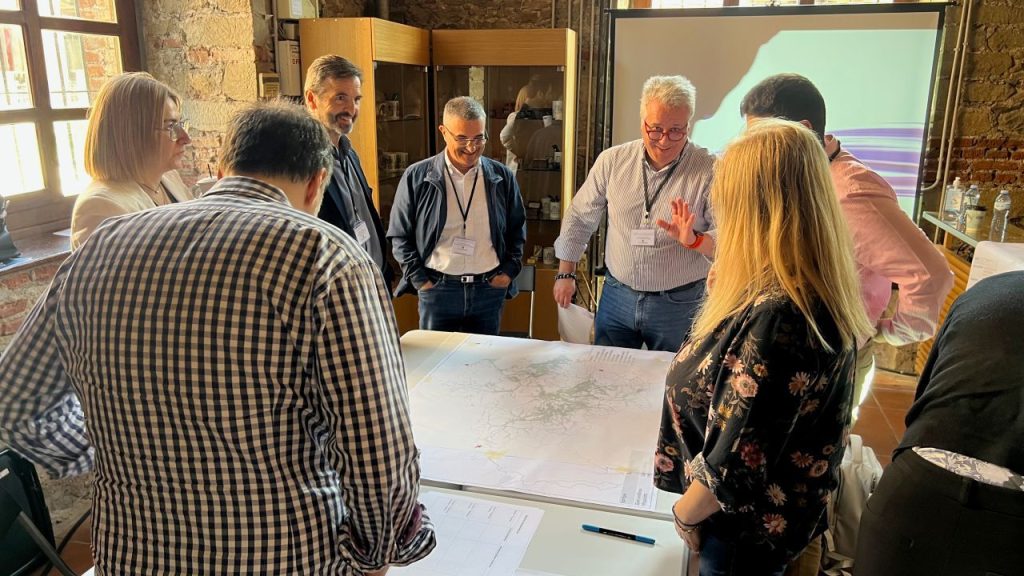
Through a series of participatory exercises, scenario reviews and spatial planning activities, participants worked together to refine future development pathways, identify opportunities and challenges, explore synergies and conflicts, and define indicators that will guide the implementation of Sponge Measures across the basin. The programme included collaborative sessions on the co-design of future “Sponge Landscapes” for 2050, exchanges between stakeholder groups and discussions on next steps for implementation.
The workshop brought together the Greek Demonstrator’s implementing partners, including TOEB Tavropos, the Municipality of Agia, e-Trikala S.A., and the Melivia Agricultural Cooperative. Their active participation was complemented by the contribution of experts and representatives from the Hellenic Ministry of Environment and Energy, the Ministry of Rural Development and Food, the Natural Environment and Climate Change Agency (NECCA), the Hellenic Agricultural Insurance Organisation (ELGA), the Region of Thessaly, the Civil Protection Directorate of the Region of Thessaly, DEYA Larisas, and Piraeus Bank.
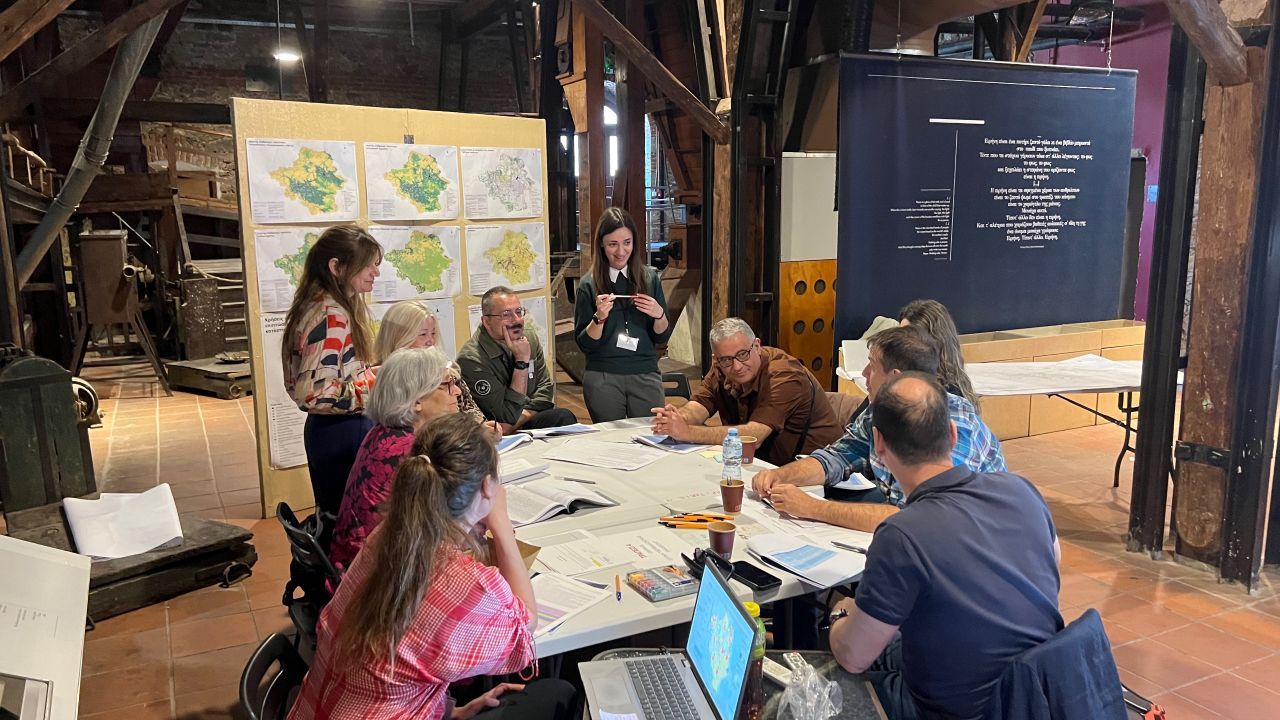
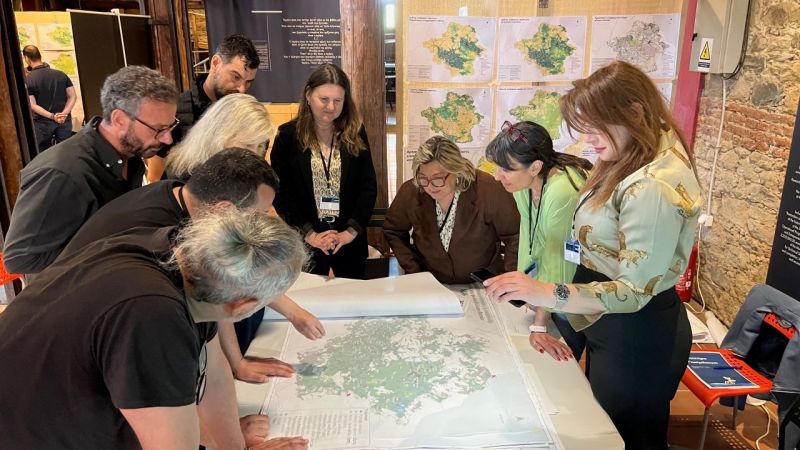
Participants collectively shaped a vision for a future Pinios River Basin that is more resilient to floods and droughts, better managed in terms of water resources, richer in healthy soils and biodiversity, and supported by practical, locally adapted solutions. The discussions highlighted the importance of integrating scientific knowledge, local expertise and stakeholder perspectives to ensure that future interventions respond effectively to both environmental and socio-economic challenges.
The strong participation, constructive dialogue and collaborative spirit demonstrated throughout the day underscored the value of co-design and stakeholder engagement in advancing climate resilience. The workshop represents a significant milestone for SpongeWorks in Greece and provides a solid foundation for the next stages of planning and implementation in the Pinios River Basin.
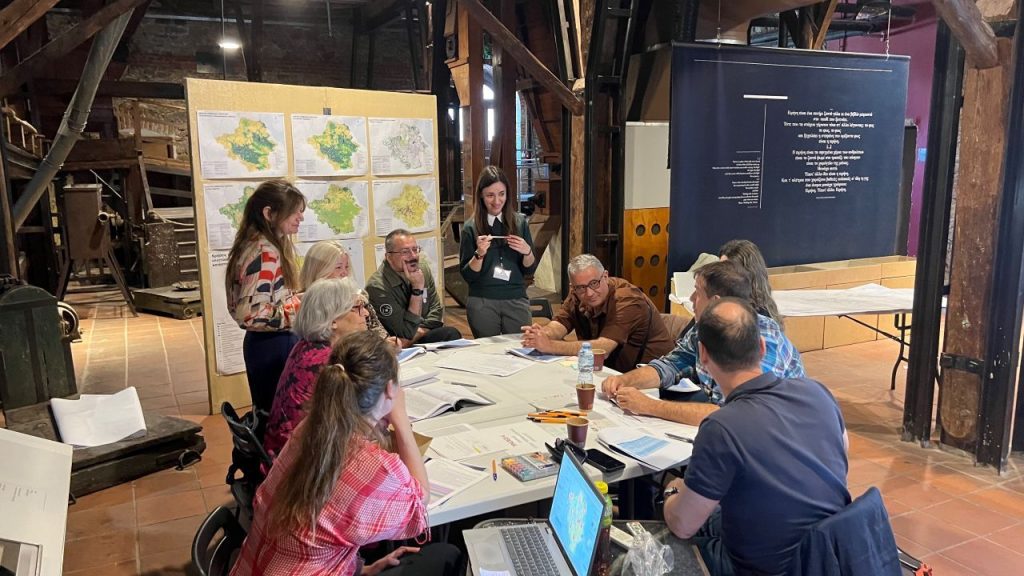
As SpongeWorks moves forward, the outcomes of the workshop will contribute to the development of integrated Sponge Strategies that strengthen the basin’s capacity to retain water, reduce climate risks and enhance ecosystem health, supporting a more resilient future for communities, agriculture and nature alike.
The SpongeWorks project has received funding from the European Union’s Horizon Europe research and innovation programme under grant agreement No 101156116 and from the UK Research and Innovation/HM Government. The project runs from 1 September 2024 to 31 August 2028.
Views and opinions expressed are those of the author(s) only and do not necessarily reflect those of the European Union or the granting authority, the European Climate, Infrastructure and Environment Executive Agency (CINEA). Neither the European Union nor the granting authority can be held responsible for them.
