

On Sunday, 10 May 2026, the Local Organization for Land Improvement of Tavropos (TOEV Tavropou) in Karditsa, in collaboration with the Institute of Soil and Water Resources of the Hellenic Agricultural Organization DEMETER, organized a biodiversity recording action (BioBlitz) in pilot fields within its area of responsibility.
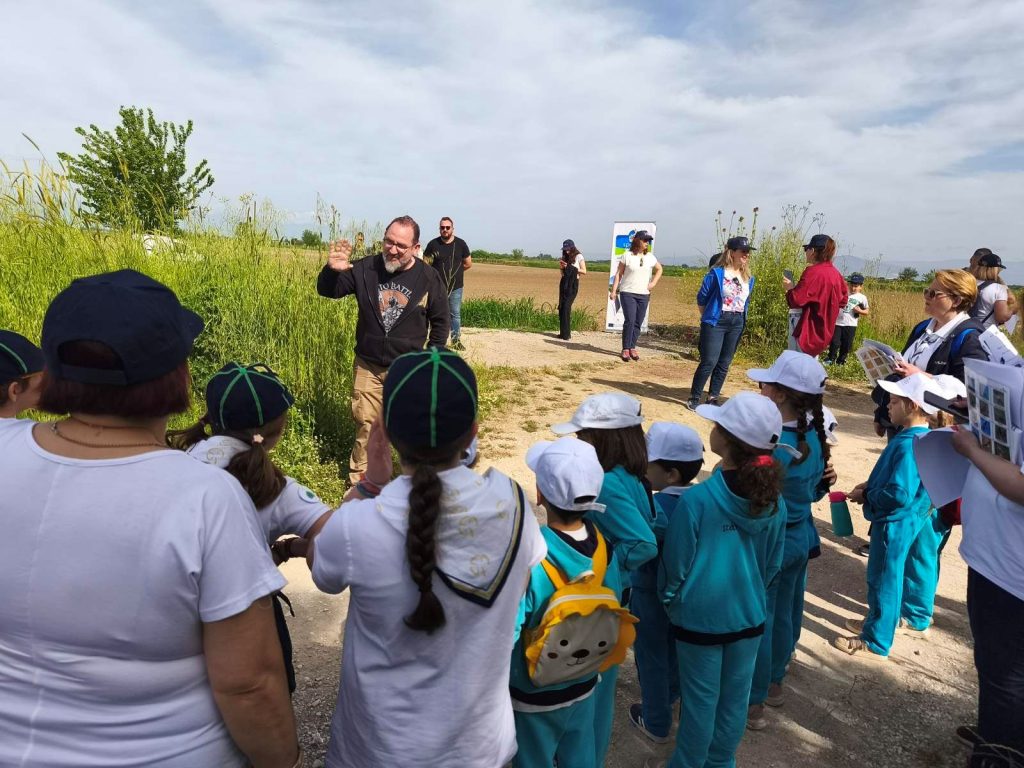
Guided by scientists from the Institute of Soil and Water Resources, the children from the Karditsa local branch of the Greek Girl Guides Association explored the natural environment of the area. learned how to observe, identify and record species found in the pilot fields. Following scientific monitoring protocols, they collected valuable biodiversity data while gaining first-hand experience in citizen science and environmental monitoring.
Among the most common plant species observed were wild carrot (Daucus carota), slender wild oat (Avena barbata) and common vetch (Vicia sativa). The insect observations included brown argus (Aricia agestis) and meadow brown (Maniola jurtina) butterflies, the seven-spot ladybird (Coccinella septempunctata) and the western honey bee (Apis mellifera). The fields also hosted a diversity of birdlife, including Eurasian skylark (Alauda arvensis), crested lark (Galerida cristata), calandra lark (Melanocorypha calandra), common kestrel (Falco tinnunculus), Eurasian hoopoe (Upupa epops) and house martin (Delichon urbicum).
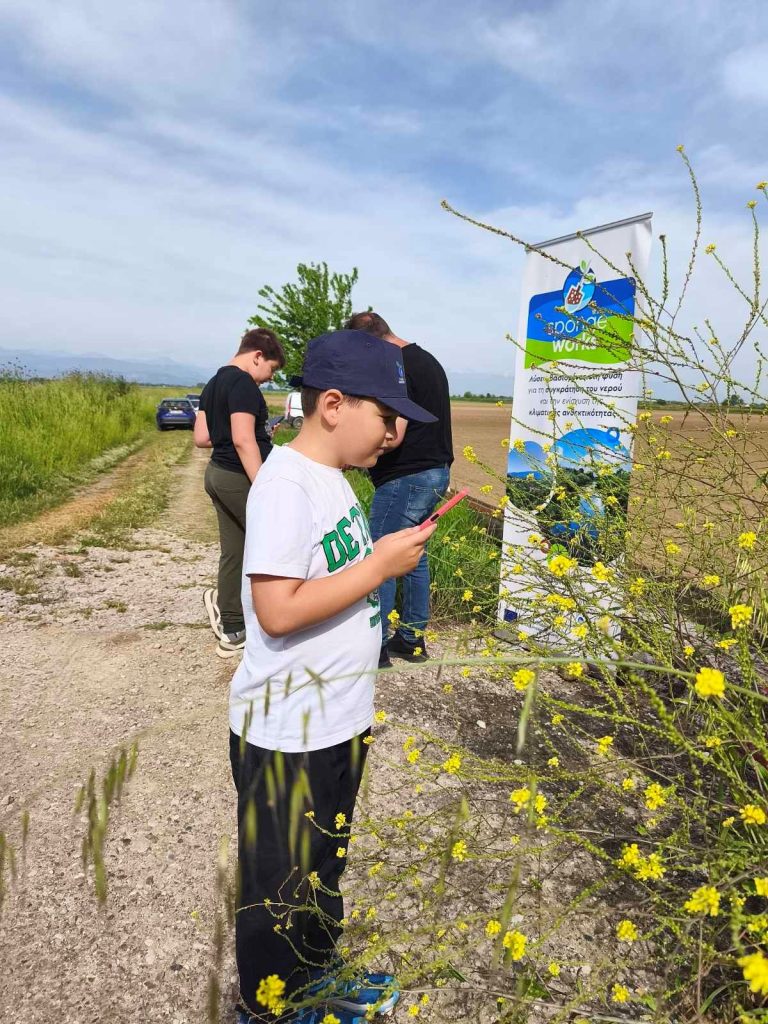
The data collected during the BioBlitz will help assess and showcase the impacts of the Nature-based Solutions (NbS) being implemented in the TOEV Tavropou pilot fields within the SpongeWorks Greek Demonstrator.
These measures include reduced tillage practices, improved irrigation management, and the establishment of buffer zones and hedgerows around agricultural fields to enhance ecosystem resilience and biodiversity.
By connecting local communities with scientific research, the activity highlighted the important role that Nature-based Solutions can play in supporting biodiversity and sustainable agricultural landscapes.
The SpongeWorks project has received funding from the European Union’s Horizon Europe research and innovation programme under grant agreement No 101156116 and from the UK Research and Innovation/HM Government. The project runs from 1 September 2024 to 31 August 2028.
Views and opinions expressed are those of the author(s) only and do not necessarily reflect those of the European Union or the granting authority, the European Climate, Infrastructure and Environment Executive Agency (CINEA). Neither the European Union nor the granting authority can be held responsible for them.
