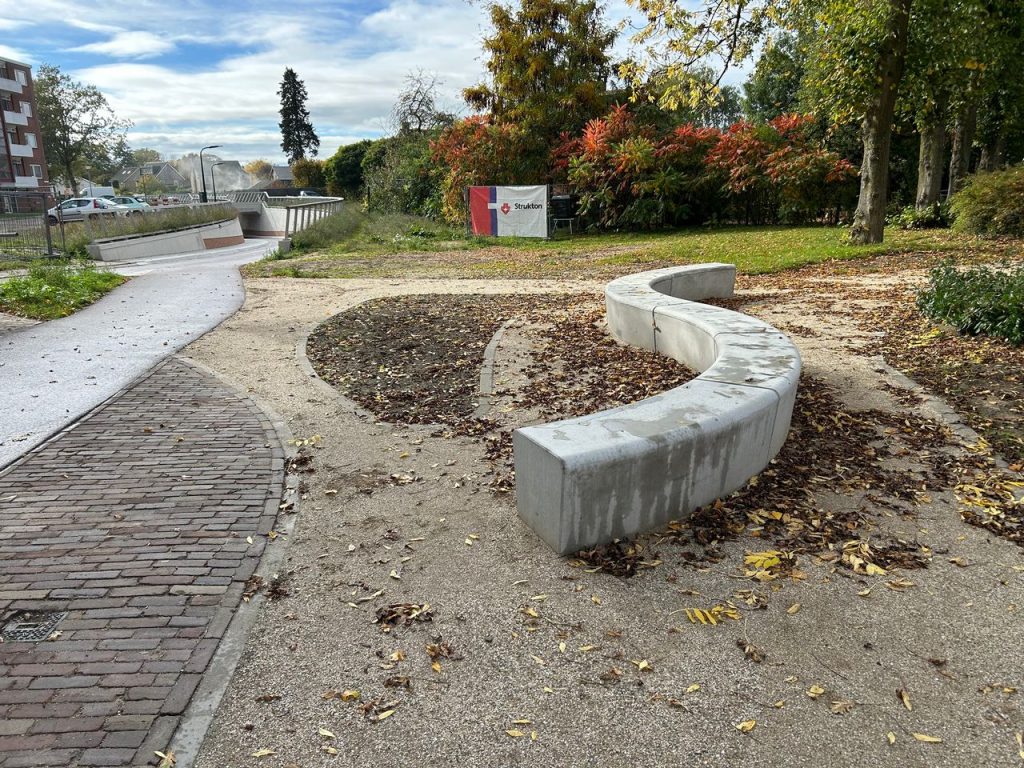
In Hardenberg, SpongeWorks is showing how everyday public space can contribute to climate resilience. One of the most visible examples is the development of a climate-resilient bicycle route, designed not only to improve mobility and safety, but also to demonstrate how urban areas can function more like a sponge.
The route integrates nature-based solutions into urban infrastructure, combining cycling paths with features that help retain, infiltrate and manage rainwater locally. By slowing runoff and supporting water storage in soils and green areas along the route, the intervention contributes to reducing flood risks while supporting urban cooling and biodiversity.
Beyond its technical function, the bicycle route plays a key role in raising awareness and engaging local communities. As a daily-use space for residents, it makes climate adaptation visible and tangible, showing how small-scale interventions can collectively strengthen the resilience of the wider Vecht basin.
The new route includes green areas reshaped as meeting spaces, permeable card parking spots and new tree and shrub planting along the way.
Building for the route was completed in the winter of 2025, to be followed by plantings in in early 2026.
This initiative reflects the broader SpongeWorks approach in Hardenberg: combining urban design, citizen engagement and practical sponge measures to create healthier, more climate-ready cities.