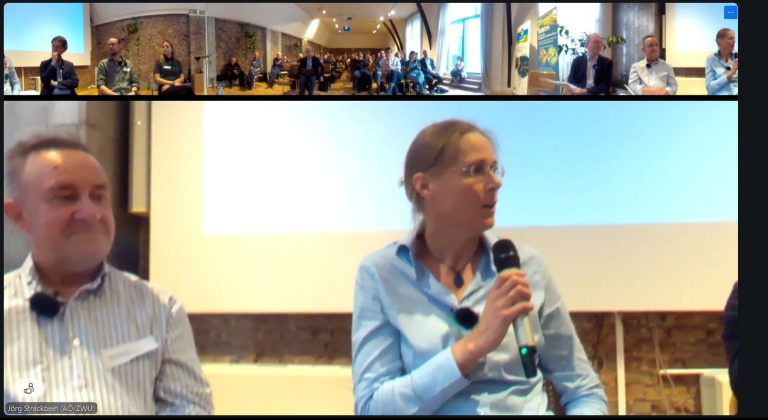
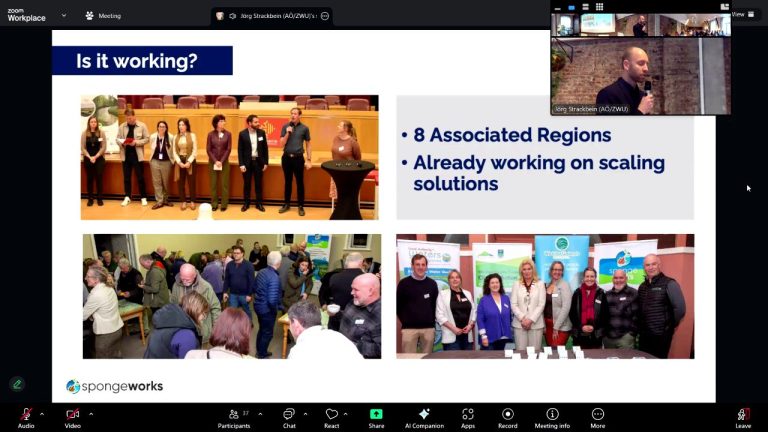
On 10 March 2026, SpongeWorks participated in a major policy event in Brussels: “Freshwater, Wetlands, and Sponge Landscapes for Resilient Europe: Policy Insights from Flagship Projects” bringing together leading Horizon Europe projects working on freshwater and wetland restoration. The event, organised jointly by the MERLIN, WaterLANDS, SpongeScapes and SpongeWorks projects, marked the presentation of MERLIN’s final results and provided a platform to discuss how nature-based solutions can be scaled up across Europe.
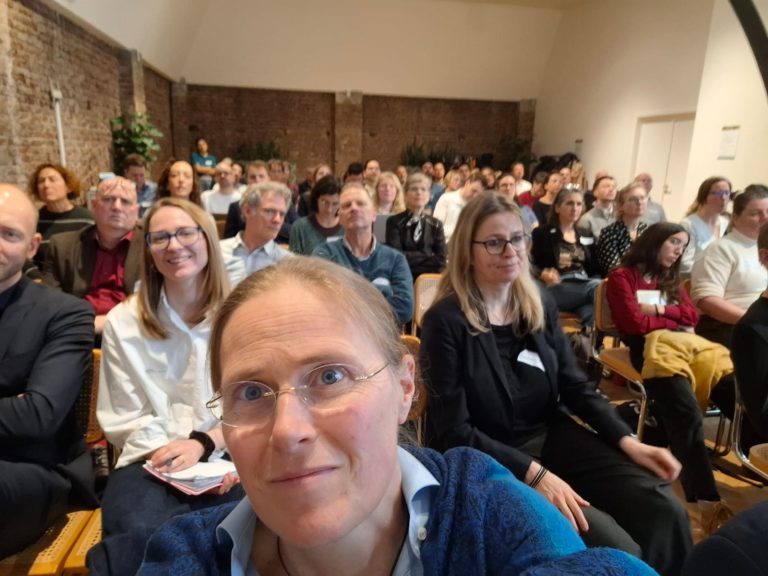
Held at Maison de la Poste, the event gathered policymakers, researchers and practitioners to exchange lessons from large-scale restoration initiatives and explore opportunities created by the EU Nature Restoration Regulation.
SpongeWorks at the centre of the discussions
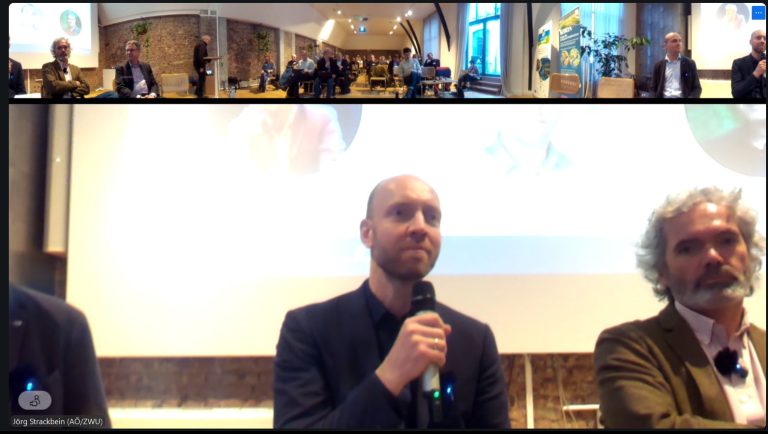
SpongeWorks coordinator Christian Albert introduced the project and moderated a panel discussion on restoration financing, addressing the financial mechanisms needed to support large-scale implementation of nature-based solutions.
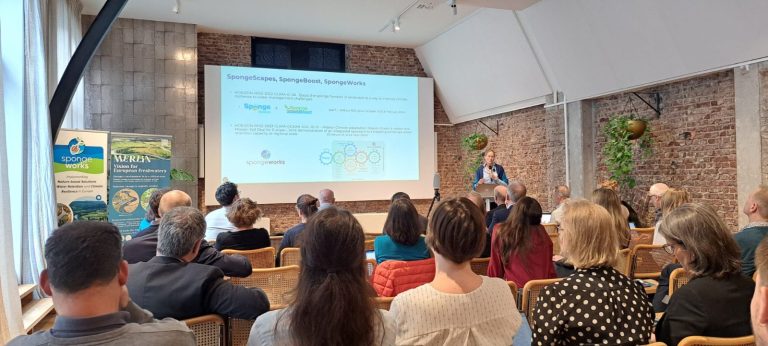
Ellis Penning, coordinator of SpongeScapes and co-coordinator of SpongeWorks, presented the sponge landscapes approach and moderated a session on upscaling restoration, focusing on how restoration efforts can move from individual projects to landscape-scale transformation.
Sharing tools, experiences and lessons from the field
Throughout the afternoon, participating projects shared practical tools and experiences developed through their work. These included digital tools such as the MERLIN web application, financing workflows for restoration projects, and decision-support systems developed within the WaterLANDS project.
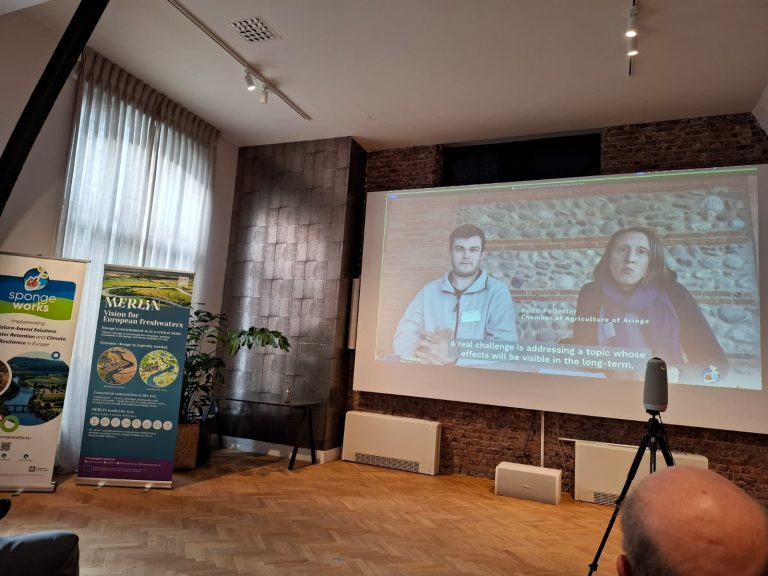
A particularly powerful part of the programme came from video testimonies from restoration practitioners across Europe, highlighting the realities of implementing nature-based solutions on the ground. Contributors included SpongeWorks implementers Arend van de Wetering from Hardenberg Municipality in the Nertherlands, and Marion Da Silva from SMIVAL, and Lucas Vergé and Aude Pelletier from the Chambers of Agriculture of Haute-Garrone and Ariège, in France.
Participants also discussed inspiring policy developments, including Denmark’s commitment to restore 140,000 hectares of peatlands, demonstrating the scale of ambition that is possible when restoration becomes a national priority.
A crucial moment for nature restoration in Europe
With the EU Nature Restoration Regulation now in force, discussions emphasised the importance of the coming months as national governments begin preparing their restoration plans.
Projects like SpongeWorks are helping ensure that sponge landscapes and resilient freshwater systems are integrated into these strategies, contributing practical experience, tools and policy insights to support implementation across Europe.