


In a bold move for urban climate resilience, the Association “Lviv Agglomeration” is revitalizing degraded city peatlands.
We spoke to the project leaders behind this ambitious effort, who recently joined the SpongeWorks Project
What sparked the project in Lviv?
The immediate threats were industrial peat extraction near the village of Hamaliivka, loss of important species and habitats as well as loss of vital water reservoir (The Hamaliivka lake) which could potentially threaten Lviv’s heating supply.
Instead, the team saw an opportunity to flip the script — and turn a vulnerable area into an ecological asset. Our vision is to establish the largest nature reserve in the Lviv agglomeration and restore urban wetlands to their natural sponge-like state. These peatlands will store water, improve local climate conditions, and reduce flood and drought risks, all while protecting biodiversity.
Why did you want to join SpongeWorks?
Because we saw a chance — not just to protect a wetland, but to completely reimagine its future.
Our goal has always been to restore the wetlands ecosystem in Lviv and transform the serious threats it faces into a real opportunity for resilience. SpongeWorks offered exactly that: access to innovative tools, the chance to exchange knowledge with like-minded partners across Europe, and international backing to help us create a designated nature reserve.
We also bring something unique to the table.
With years of experience working in degraded urban wetlands, we’ve built strong partnerships across different levels of government, and have deeply engaged local communities through hands-on pilot projects, public workshops, and shared vision-building.
For us, SpongeWorks isn’t just a project — it’s a platform to scale up impact, share what we’ve learned, and be part of a wider European movement for climate resilience.
What is your experience with sponge measures so far?
Our team has crafted a strategic restoration plan focused on bringing degraded peatlands back to life. At the heart of this effort is hydrological restoration — using smart, water-retaining structures and selectively dismantling drainage canals to rebalance the natural flow of water.
We’re also conducting in-depth assessments of biodiversity, soils, and hydrology to better understand the ecosystem’s needs — and how to protect them for the long haul.
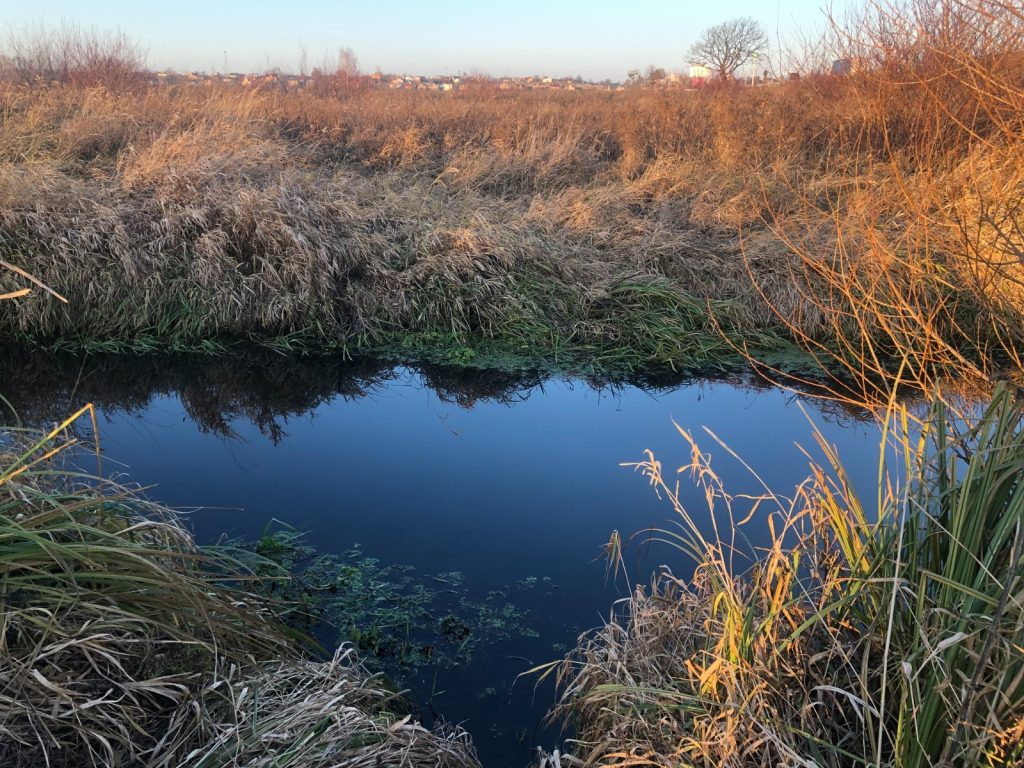
Peatlands north of Lviv are now facing fragile hydrology, soil degradation, and heightened fire risk.
Who is behind this initiative?
The initiative is led by the Association “Lviv Agglomeration” in collaboration with:
The Faculty of Geography, Ivan Franko National University of Lviv, the Danube-Carpathian Programme (DCP) and the Lviv Environmental Fund (LEF)
Why is this project important beyond Lviv?
Because it’s a living model for other cities facing similar threats.
The project demonstrates how urban wetlands can serve people and nature — improving climate resilience while involving citizens directly in transformation.
“We’re not just restoring peatlands — we’re creating a new standard for urban resilience in Eastern Europe,” says Roman Kizyma, Executive Director of Lviv Agglomeration.
(c) Danube-Carpathian Programme
The SpongeWorks project has received funding from the European Union’s Horizon Europe research and innovation programme under grant agreement No 101156116 and from the UK Research and Innovation/HM Government. The project runs from 1 September 2024 to 31 August 2028.
Views and opinions expressed are those of the author(s) only and do not necessarily reflect those of the European Union or the granting authority, the European Climate, Infrastructure and Environment Executive Agency (CINEA). Neither the European Union nor the granting authority can be held responsible for them.