Soil that is left bare after a harvest is prone to erosion, flooding and nutrient depletion. In short: it loses its life and forms the basis for extreme weather events. In the Leze valley, mudslides are a particular problem not only for farmers, but society as a whole.
SpongeWorks partner Chambre d’ Agriculture d’ Ariege is aiming to mainstream the practice of cover crops, particularly those sown in summer in water-limiting conditions. A fundamental principle of regenerative agriculture, cover crops require careful adaptation to soil, climate, and rotation conditions. On the clayey and steep soils of the Lèze Valley, with low rainfall, cover crops sown in summer are difficult to grow – but also more necessary for the same reasons.
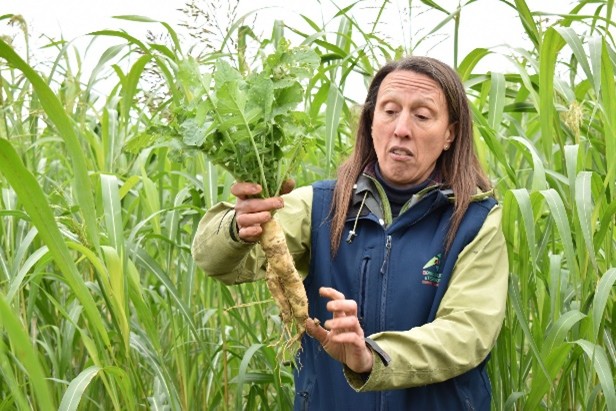
In a barley field in Le Fossat of 15 hectares, sorghum and radish were chosen as cover crops. Sowing was done by drone.
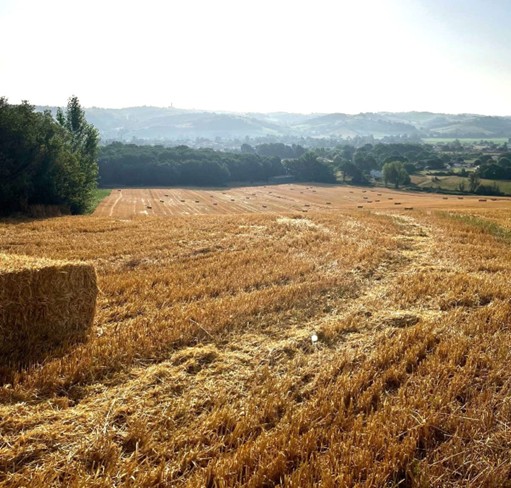
The corn field after the harvesting of the barley– photo taken on 25/06/2025
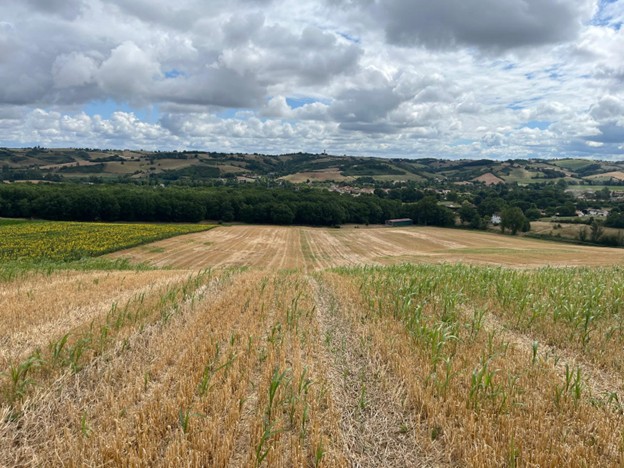
1 month later – 24/07/2025
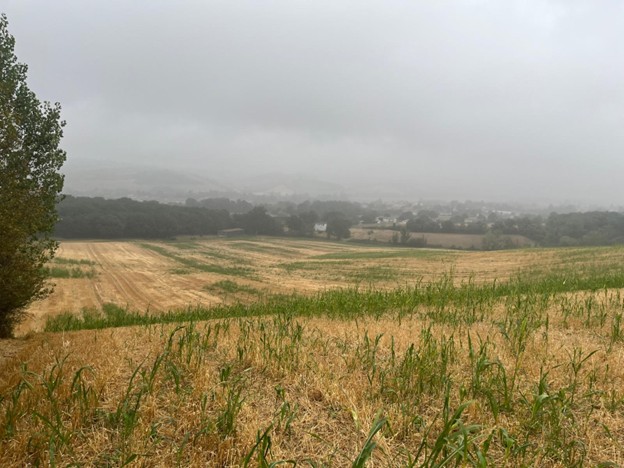
2 months later – 18/08/2025 There are signs of greening but rain in this period was scarce, so the cover crops have not yet grown a lot.
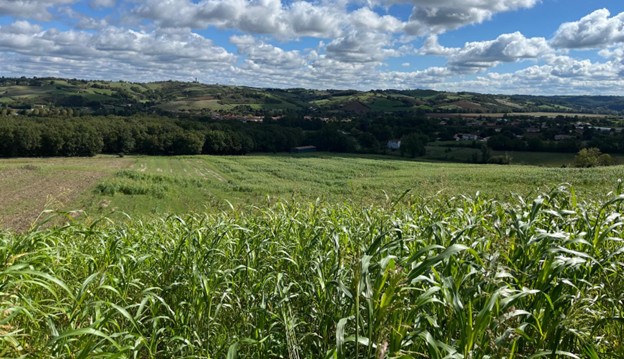
3 months later – 23/09/2025 The end August rains helped the cover crops grow – although growth is not even in all parts of the field, the result overall is good.
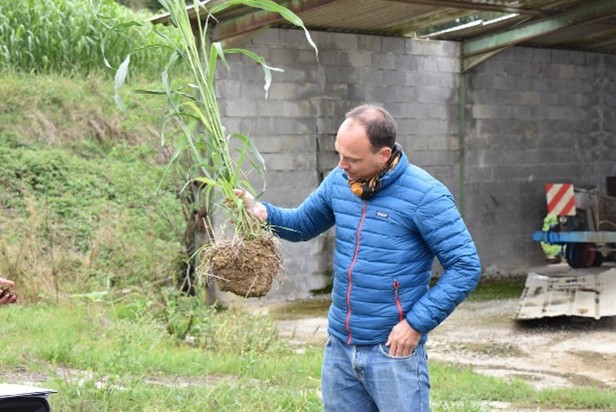
The two cover crops were combined because radish has a thick root creating channels for water infiltration; while sorghum with its fine roots but large biomass adds soil organic carbon, therefore having a complementary effect on soil formation.
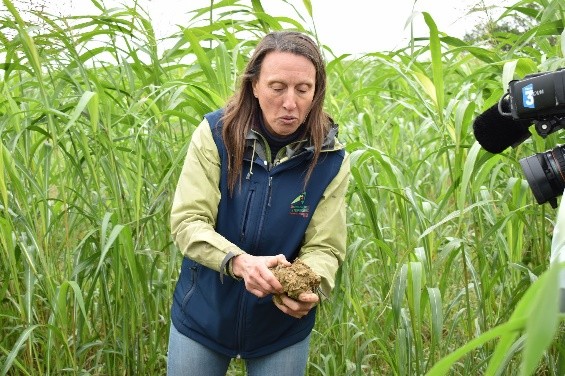
They will both play a key role in retaining the soil and protecting against flooding due to heavy rains in autumn and winter. Their roots help break up compacted soil and they increase soil organic matter, while the shade discourages the growth of unwanted weed and helps retain soil moisture.